Detected through PSA screening or symptoms, prostate cancer requires measured, evidence-based care. At Sydney Urology and Robotic Group, every case is evaluated with clarity and precision to achieve control while maintaining continence and sexual health.
CONDITIONS
Prostate Cancer


Common Risk Factors
Age > 50
Family history of Prostate Cancer
Abnormal Total PSA or PSA Level change
BRCA or other gene mutation
Race/cultural background
Other family history of cancer (ie, Breast, Ovarian, Pancreatic, Colorectal)

How We Diagnose Prostate Cancer
Repeat PSA Level
Digital Rectal Examination
Further PSA Tests - Free : Total Ratio, PSA doubling time, Prostate Health Index, PSA-Density, etc.
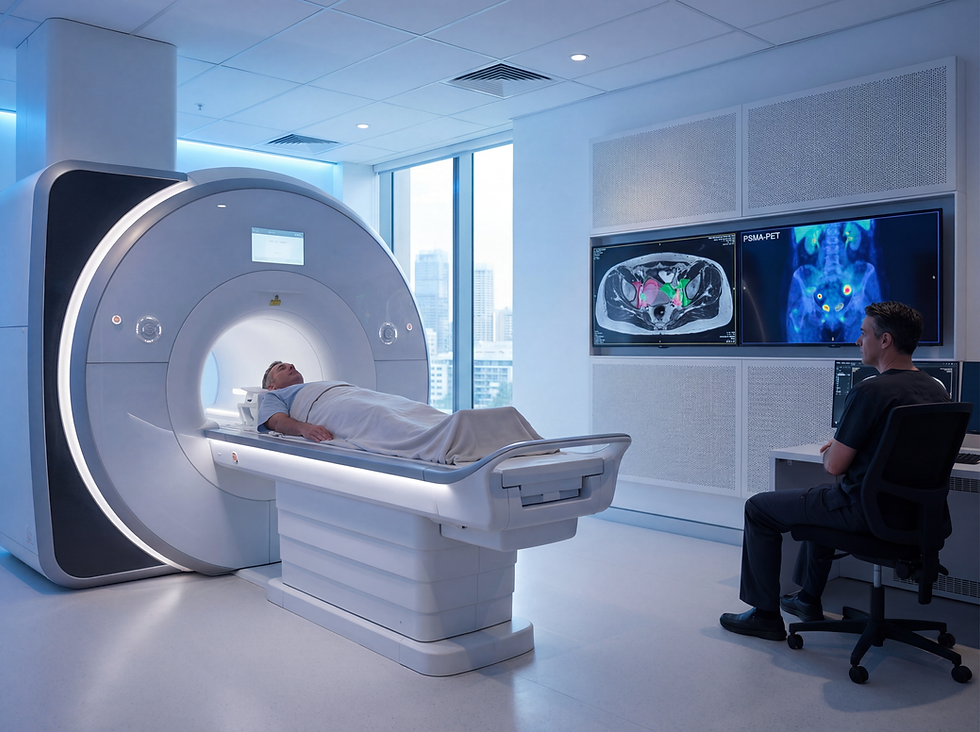
MRI-Prostate
Targeted Prostate Biopsy
PSMA-PET

How We Treat Prostate Cancer
Treatment may include one or more of the following procedures.
Active surveillance of low-risk prostate cancer with regular PSA monitoring, repeat MRI and ongoing clinical review.
Focal therapy - Minimally invasive treatment with laser or electricity that targets only the cancer-affected areas of the prostate.
Minimally invasive surgical removal of the prostate using robotic precision to improve outcomes and preserve function.
Radiotherapy by a radiation oncologist to treat the prostate and possibly the lymph glands in the pelvis.
Tablets or hormone injections to lower testosterone levels to slow or stop the growth of prostate cancer.
Systemic medication to treat advanced or resistant prostate cancer.
